
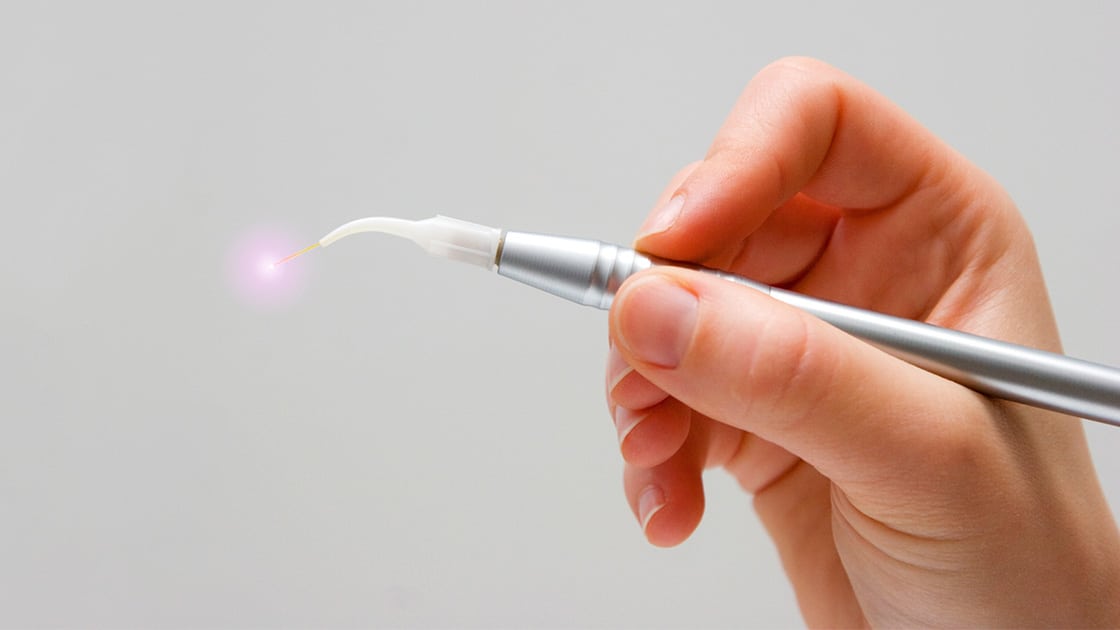
Lasers in Dentistry — Minimally Invasive Procedures
Dental lasers are medical devices that emit a beam of concentrated light for a variety of dental treatments. When used for surgical and periodontal procedures, the laser acts as a cutting instrument. Procedures performed with dental lasers are minimally invasive and preferable to those performed with conventional dental instruments.
Lasers in dentistry enable many dental procedures to be performed with no noise, minimal pain, and fewer appointments. All lasers work by delivering energy in the form of light. When used for surgical and dental procedures, the laser acts as a cutting instrument or a vaporizer of the tissue it comes into contact with. When used for “curing” a filling, the laser helps to strengthen the bond between the filling and the tooth. When used in teeth-whitening procedures, the laser acts as a heat source, enhancing the effect of tooth-bleaching agents. The procedures performed with dental lasers are minimally invasive and preferable to conventional surgery.
Benefits of Lasers
- Reduced heat and vibration
- Little or no need for anesthetic
- Minimal bleeding
- Faster treatment time
- Minimal post-operative swelling and discomfort
- Fewer infections or post-operative complications
Treatments Offered by Lasers
- Most restorative dental treatments
- Perform frenectomies (such as correction of ankyloglossia)
- Reshape gum tissue
- Biopsy or remove soft tissue lesions and ulcers
- Remove areas of tooth decay